Unschooling is self-directed learning without a set curriculum. Here's what unschooling actually looks like day to day, and whether it could work for your family.
If you've spent any time in alternative education circles, you've heard the word "unschooling" thrown around. Maybe you nodded along while quietly thinking: wait, no school at all?
You're not alone in asking. Searches for "what is unschooling" have surged in the past year, and interest in the US, Australia, and Canada keeps climbing. This guide breaks down exactly what unschooling is, what it looks like in real families, and how to know if it's right for yours.
The Short Answer
Unschooling is a form of homeschooling where children direct their own learning, driven by their curiosity instead of a fixed curriculum. There are no textbooks to follow, no subjects to check off, and no grade levels. Learning happens through real life: cooking, building, exploring, playing, traveling, and asking a million questions.
The core belief behind unschooling is simple: kids are natural learners. Give them freedom, resources, and a supportive adult, and they'll learn what they need when they need it.
Unschooling vs Homeschooling: The Key Difference
Here's where most parents get confused. Homeschooling means educating your child at home, and it usually involves a curriculum, a schedule, and structured lessons. You're essentially running a private school at your kitchen table.
Unschooling takes that structure away. There's no curriculum, no lesson plan, and no "school time." A ten-year-old who's obsessed with sharks might spend a month reading marine biology books, watching documentaries, and visiting an aquarium, and that counts as science. A kid who wants to build a gaming PC absorbs math, engineering, and problem solving without ever opening a textbook.
What an Unschooling Day Actually Looks Like
Forget the image of kids playing video games all day while parents shrug. Real unschooling days tend to look like this:
- A morning spent baking bread, which sneaks in fractions, chemistry, and patience
- An afternoon at the library, where the kid picks books on whatever they're currently obsessed with
- A family road trip that turns into a hands-on geography and history lesson
- Conversations, lots of them, sparked by whatever question the child brings to the table
Parents act as facilitators, not teachers. They observe what their kids are curious about, then connect them to resources, people, and experiences that deepen that curiosity.
Common Myths, Debunked
Myth: Unschooling is just being lazy.
In practice, unschooling parents are highly involved. It takes real effort to strew resources, find mentors, plan trips, and keep answering questions.
Myth: Unschooled kids never learn to read.
Kids learn to read at wildly different ages in unschooling families, some at four, some at ten. Research on self-directed learning suggests late readers catch up quickly once they're motivated by something they actually want to read.
Myth: Unschooling means no structure ever.
Many unschooling families have strong daily rhythms, chores, and commitments like sports or classes. The difference is that the structure serves the child's goals, not a curriculum's schedule.
Is Unschooling Legal?
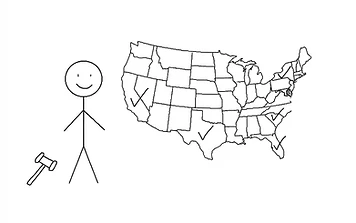
Yes, unschooling is legal in all 50 US states because it falls under each state's homeschooling laws. The requirements vary widely by state, from almost no paperwork to annual testing and curriculum review. We cover the full state-by-state breakdown in our guide: Is Unschooling Legal? A State-by-State Guide.
How Do You Know If Unschooling Fits Your Family?
Unschooling tends to work well when:
1. Your child is intensely curious and self-motivated, at least about something.
2. You have the time and energy to be hands-on as a facilitator.
3. You're comfortable trusting a non-traditional timeline.
4. Your family values independence over credentials.
It can be a poor fit if you need a recognized diploma pathway, if both parents work full time outside the home, or if your child genuinely thrives on external structure.
Not sure which alternative education model fits your family best? Take the free Raising Beyond School Pathfinder quiz and get matched in under three minutes.
Wait, There Are More Options?
Here's the thing most parents miss: unschooling is just one of many alternative education models. Montessori, Waldorf, democratic schools, forest schools, microschools, worldschooling... each one has a different philosophy, structure, and lifestyle attached.
Sifting through all of them on your own takes weeks. We've done that work for you. The Raising Beyond School Directory puts 190+ vetted alternative schools, programs, and online options in one searchable place, with ages, locations, and pricing for each. Lifetime access is a one-time $29, and it's updated as we research new schools every week.
See what's out there:
https://raisingbeyondschool.com/get-the-guide
Quick FAQ
What is unschooling in simple terms?
Unschooling is self-directed, curiosity-driven learning without a set curriculum. It's legal in all 50 states as a form of homeschooling.
What's the difference between unschooling and homeschooling?
Homeschooling usually follows a structured curriculum at home. Unschooling removes the curriculum and lets the child's interests drive learning.
Do unschoolers go to college?
Yes. Many unschoolers get into college through portfolios, community college coursework, or standardized tests taken on their own timeline.
Can you unschool part-time?
In most states, homeschool law is all-or-nothing for notification purposes, but "relaxed homeschooling" is a common middle ground.
The Raising Beyond School Team