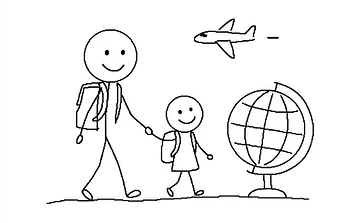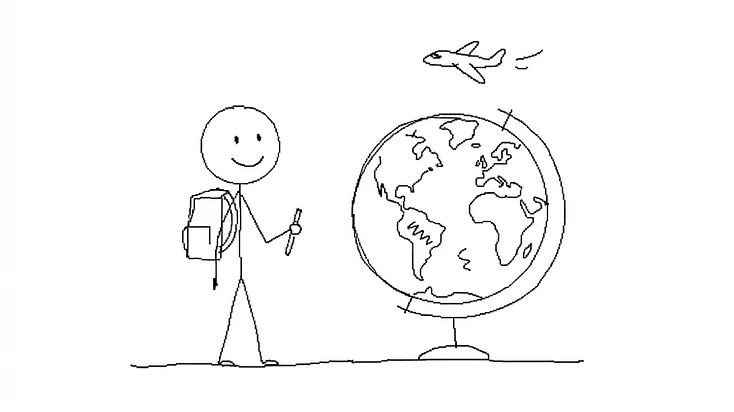
Worldschooling turns the entire planet into a classroom. Here's what it looks like in practice, how families make it work, and how to decide if it's right for yours.
What Is Worldschooling?
Worldschooling is an educational approach where families use travel and real-world experiences as the primary classroom. Instead of sitting in a room memorizing facts, kids learn history by walking through ancient ruins, practice language by ordering food in a market in Marrakech, and study biology by snorkeling over a coral reef in Bali. It's education through immersion, curiosity, and the world itself.
There's no single way to worldschool. Some families travel full-time, hopping between countries with no fixed base. Others are rooted in one place and take extended trips throughout the year. Some follow a structured curriculum on the road, while others unschool entirely and let the child's interests lead the way. What connects them all is the belief that the world is a better teacher than a textbook.
Why Families Choose Worldschooling
The reasons vary, but a few themes come up again and again:
Traditional school isn't working. Kids are bored, anxious, or disengaged. Parents notice their natural curiosity fading and want to reignite it before it's gone for good.
Desire for cultural fluency. In a connected world, understanding different cultures isn't a nice-to-have. It's a core skill. Worldschooling builds adaptability, empathy, and comfort with difference.
Family time. Traveling together creates bonds that routine rarely does. Shared adventures, shared challenges, shared wonder.
Real-world learning sticks. Kids who learn about the Roman Empire while standing in the Colosseum don't forget it. Experience-based learning is retention-based learning.
How to Start Worldschooling
If you're curious but not sure where to begin, here are practical first steps:
1. You don't have to sell everything and leave tomorrow. Start with a month-long trip somewhere new. Treat it as a trial run. See how your kids respond to learning on the road. You'll learn a lot about their style and yours.
2. Choose a curriculum (or don't). Some worldschooling families use online programs like Oak Meadow, Khan World School, or Prisma to keep core academics on track. Others unschool completely. There's no wrong answer, but it helps to know your comfort level with structure before you start.
3. Sort out the legal side early. Homeschooling laws vary by country and state. In the US, regulations range from none at all to annual testing and portfolio reviews. If you're leaving a traditional school, find out what your home jurisdiction requires before you go.
4. Build community as you go. One of the biggest concerns parents have is socialization. The good news: worldschooling communities exist almost everywhere. Facebook groups, Worldschooling Hub events, and co-learning meetups in popular hubs like Bali, Chiang Mai, Lisbon, and San Juan are easy to find. Your kids will meet other worldschooling kids. So will you.
5. Think about credentials now, not later. If your child might re-enter traditional school or apply to university, keep records. Portfolios, learning logs, and transcripts built over time are far easier than reconstructing years of learning from memory. Many worldschooling families use portfolio-based assessment, Cambridge exams, or country-specific equivalency tests to keep doors open.
Popular Worldschooling Hubs
Some destinations have developed natural worldschooling communities:
Bali, Indonesia - A massive hub with co-ops, green schools, and community events. Easy to find other families year-round.
Chiang Mai, Thailand - Affordable, safe, and packed with nomad families. Low cost of living makes long stays realistic.
Lisbon, Portugal - Growing fast. Great infrastructure, mild climate, and a welcoming expat community.
San Juan, Puerto Rico - US territory with no passport required for Americans. Excellent homeschooling laws and an active worldschooling scene.
Costa Rica - Nature immersion, eco-communities, and a laid-back culture that aligns with alternative education values.
Common Concerns (and Honest Answers)
"Will my child fall behind?" Behind what, exactly? Worldschooling kids often surpass peers in language skills, cultural awareness, adaptability, and self-direction. If you're worried about academics, use an online curriculum to keep core subjects on track. The world handles the rest.
"What about socialization?" This is the most common question and the least real problem. Worldschooling kids interact with people of all ages, cultures, and backgrounds daily. They tend to be more socially adaptable, not less. The communities in popular hubs make it easy for kids to form real friendships.
"What about high school and college?" Many universities actively recruit non-traditional students. Portfolio-based admissions, SAT/ACT scores, and letters of recommendation from mentors all work. THINK Global School is an example of a fully accredited traveling high school if you want structure during the teenage years.
"How much does it cost?" It depends entirely on where you go and how you travel. A family can worldschool in Southeast Asia or Latin America for less than the cost of private school back home. Europe is more expensive but still often cheaper than US private education. The key is choosing destinations where your dollar goes further.
Worldschooling Isn't One-Size-Fits-All
Some families travel for a year and go back to traditional school. Others never stop. Some mix worldschooling with online programs. Others unschool the whole way. The beauty of this approach is that it bends to fit your family, not the other way around.
If you took our Pathfinder quiz and matched with worldschooling, it means your answers pointed toward adventure, flexibility, and real-world learning. That's a strong starting point. The next step is figuring out what flavor of worldschooling fits your family's rhythm, budget, and goals.
Want Help Planning Your Worldschooling Journey?
At Raising Beyond School, we research and catalog alternative schools and educational models around the world. Our directory grows every week with new schools, programs, and community resources. Whether you're looking for a worldschooling hub, a Montessori school in Spain, or a forest school in Costa Rica, we're building the map.
Take the Pathfinder quiz to find your ideal education model, then reach out. We'll help you find real options that fit your family.