Forest schooling turns the outdoors into the classroom. Here's what it is, how it works, why families choose it, and how to decide if it's right for yours.
What Is Forest Schooling?
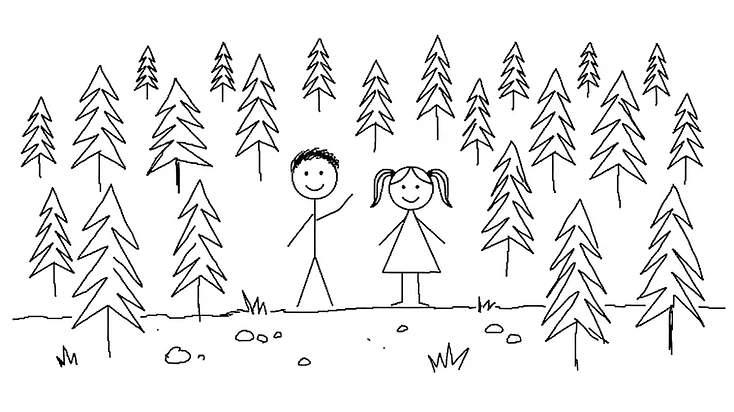
Forest schooling is an educational approach where children learn outdoors in natural settings - woodlands, meadows, beaches - for regular, sustained sessions throughout the year. Instead of nature being a field trip once a term, it's the classroom itself. Kids build dens, identify flora and fauna, light fires safely, use tools, and learn to assess real risks. The curriculum emerges from the seasons, the weather, and the children's own curiosity.
Originating in Scandinavia and formalized in the UK in the 1990s, forest school is built on a few core principles: long-term, regular outdoor sessions; learner-led inquiry; supported risk-taking; and a deep, repeated connection to the same natural place across the seasons. It's not a one-off nature walk. It's a rhythm.
Why Families Choose Forest Schooling
Forest school speaks to families who sense that something is missing from indoor, screen-heavy childhoods:
Physical health and resilience. Children who spend hours outdoors in all weathers develop stronger immune systems, better motor skills, and a comfort with discomfort that indoor kids rarely build. There is no bad weather, only bad clothing.
Emotional regulation. Studies consistently link time in nature to lower anxiety, better focus, and improved mood in children. The outdoors gives space to move, to breathe, and to decompress.
Risk as a teacher. Modern childhood has stripped out most real risk. Forest school reintroduces it in a managed way - climbing, cutting, fire-lighting - so children learn to judge danger, build confidence, and recover from small failures.
Stewardship. Children who know a wood by name, who watch the same oak change through the year, grow into adults who protect it. You protect what you love.
How Forest School Actually Works
A typical forest school session runs for a half or full day, weekly, over a full school year or longer. Groups are small. A trained forest school leader facilitates rather than directs, and children are encouraged to follow their own lines of inquiry - a puddle becomes a physics lesson, a fallen log becomes an ecosystem study.
Activities are hands-on and seasonal: shelter-building in autumn, fire and tool work in winter, plant identification in spring, water play and conservation in summer. The same site is revisited repeatedly, so children witness its full seasonal cycle and develop a genuine relationship with the place.
Assessment is observational and portfolio-based rather than test-driven. Leaders document each child's growth in confidence, capability, and curiosity over time - skills that don't show up on a standard report card but matter enormously.
Is Forest School Right for Your Family?
Forest school tends to be a strong fit when several of these are true:
Your child thrives outdoors. They come alive in green space, focus better after physical activity, and resist being cooped up inside.
You value resilience over perfection. You're comfortable with muddy clothes, scraped knees, and the idea that manageable risk is part of growing up.
You want a slower, deeper childhood. Forest school resists the rush. It trusts that time in nature is not time wasted but time invested in long-term wellbeing.
You're open to a hybrid model. Many families combine forest school with a traditional school or a structured home curriculum - the outdoors doesn't have to be the whole education to be a powerful part of it.
Where Forest Schools Operate
Forest schools now exist across the UK, Scandinavia, mainland Europe, North America, and increasingly in Asia and Australasia. They range from fully outdoor kindergartens for early years, to weekly forest school sessions embedded within mainstream schools, to standalone forest school providers running after-school and holiday programs.
In the UK, the Forest School Association maintains a directory of qualified providers. In the US, organizations like the Eastern Region Association of Forest and Nature Schools and various state networks do similar work. Availability is growing fast, but quality and accreditation vary - it's worth checking a provider's training and insurance before committing.
Common Concerns (and Honest Answers)
"What about the weather?" This is the most common worry and the easiest to solve. With the right layers, waterproofs, and footwear, children are comfortable and happy outdoors in almost any conditions. The Scandinavian saying holds: there's no bad weather, only bad clothing. Forest schools provide kit lists and guidance.
"Will my child fall behind academically?" Forest school isn't a replacement for core academics - it's a complement. The evidence shows children who spend regular time in nature often perform better academically, not worse, thanks to improved focus, executive function, and wellbeing. Many families pair forest school with a structured curriculum at home or school.
"Is it safe?" Managed well, yes. Trained leaders, small groups, strict tool and fire protocols, and a culture of risk assessment make forest school statistically very safe. The goal is not to eliminate risk but to teach children to navigate it - a life skill in itself.
"What about socialization?" Forest school is deeply social. Small, mixed-age groups build strong peer bonds, mentorship, and collaboration. Children learn to communicate, negotiate, and support each other in a setting that rewards cooperation over competition.
Forest Schooling vs. Other Outdoor Models
Forest school is often confused with nature-based learning, outdoor education, or wild schooling. The key distinctions: forest school is long-term and regular (not occasional), learner-led (not instructor-directed), and rooted in a single repeated site (not a roving trip). If your family travels constantly and learns from many places, worldschooling may be a closer fit. If you want a fixed outdoor base with deep seasonal rhythm, forest school is the one.
Want Help Finding a Forest School?
At Raising Beyond School, we research and catalog alternative schools and educational models around the world - including forest schools, nature kindergartens, and outdoor programs across dozens of countries. Our directory grows every week with new schools, programs, and community resources.
Take the Pathfinder quiz to find your ideal education model, then explore the directory for real forest school options that fit your family's location and rhythm.